Is Wireless Charging Bad for Your Phone Battery? What You Need to Know
Is Wireless Charging Bad for Your Phone Battery? What You Need to Know
Wireless charging has become a standard feature of modern smartphones, especially with the growing adoption of magnetic charging and the latest Qi2 technology.
But one question continues to concern many consumers and product developers:
Does wireless charging damage your phone battery?
The short answer is no—not when you use a properly designed and certified wireless charger.
Like wired charging, wireless charging generates some heat. However, battery aging is influenced much more by factors such as temperature, charging habits, time spent at high battery levels, and the total number of charge cycles than by whether the power is delivered through a cable or wirelessly.
As wireless charging technology continues to evolve, improvements in magnetic alignment, power management, thermal control, and active cooling are making wireless charging more efficient and reliable than ever.
What Actually Causes Smartphone Battery Aging?
Modern smartphones typically use lithium-ion batteries. Like all rechargeable batteries, they gradually lose capacity over time.
Several factors have a significant impact on battery aging.
1. Heat
Heat is one of the most important factors affecting lithium-ion battery performance and long-term battery health.
During charging, a certain amount of energy is inevitably converted into heat. If a device remains at elevated temperatures for extended periods, battery degradation can accelerate.
This is why thermal management is becoming increasingly important as wireless charging power increases.
2. Staying at 100% for Long Periods
Keeping a lithium-ion battery at a very high state of charge for extended periods can place additional chemical stress on the battery.
Modern smartphones therefore use intelligent charging algorithms to reduce the amount of time the battery spends at maximum voltage.
Features such as optimized charging can temporarily hold charging around a lower level and complete the final portion of the charge closer to the time the user normally needs the device.
3. Charge Cycles
Battery capacity also gradually decreases as the battery goes through charging and discharging cycles.
A charging cycle does not necessarily mean plugging the phone in once. Instead, it generally refers to using an accumulated amount of battery capacity equivalent to 100%.
For example, using 50% of the battery today and another 50% tomorrow is approximately one full cycle.
Importantly, wireless charging itself is not inherently a battery-aging factor.
The key factors are how much heat is generated, how the charging power is managed, and how the battery is controlled during charging.
Does Wireless Charging Generate More Heat?
This is where the quality and design of the wireless charger become important.
Wireless power transfer is not 100% efficient. A small portion of the energy is lost during the transfer process and becomes heat.
Poor coil alignment, inefficient power conversion, inadequate thermal design, or excessive charging power can increase this heat.
However, modern wireless charging systems are designed with multiple mechanisms to manage these conditions.
A well-designed wireless charging system can continuously manage:
- Charging power
- Battery temperature
- Coil temperature
- Foreign object detection
- Charging efficiency
- Power conversion
- Charging speed
The goal is not simply to deliver more power, but to deliver the appropriate amount of power while maintaining safe operating temperatures.
Why Magnetic Alignment Matters
One of the major developments in wireless charging is magnetic alignment.
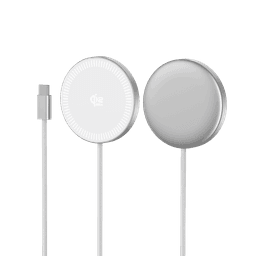
Qi2 introduces a magnetic attachment system that helps position the smartphone and charging coil more accurately.
Better alignment can improve energy transfer efficiency because the transmitting and receiving coils are positioned more consistently.
This can help reduce unnecessary energy loss and heat while also improving the overall user experience.
For magnetic charging products, alignment is therefore not just about convenience. It is also an important part of charging efficiency and thermal management.
Qi2 and the Evolution of Wireless Charging
The introduction of Qi2 represents an important step forward for wireless charging.
Compared with earlier generations of wireless charging, Qi2 combines standardized wireless power transfer with magnetic alignment, helping improve interoperability and charging consistency across compatible devices.
As charging power increases, thermal management becomes even more important.
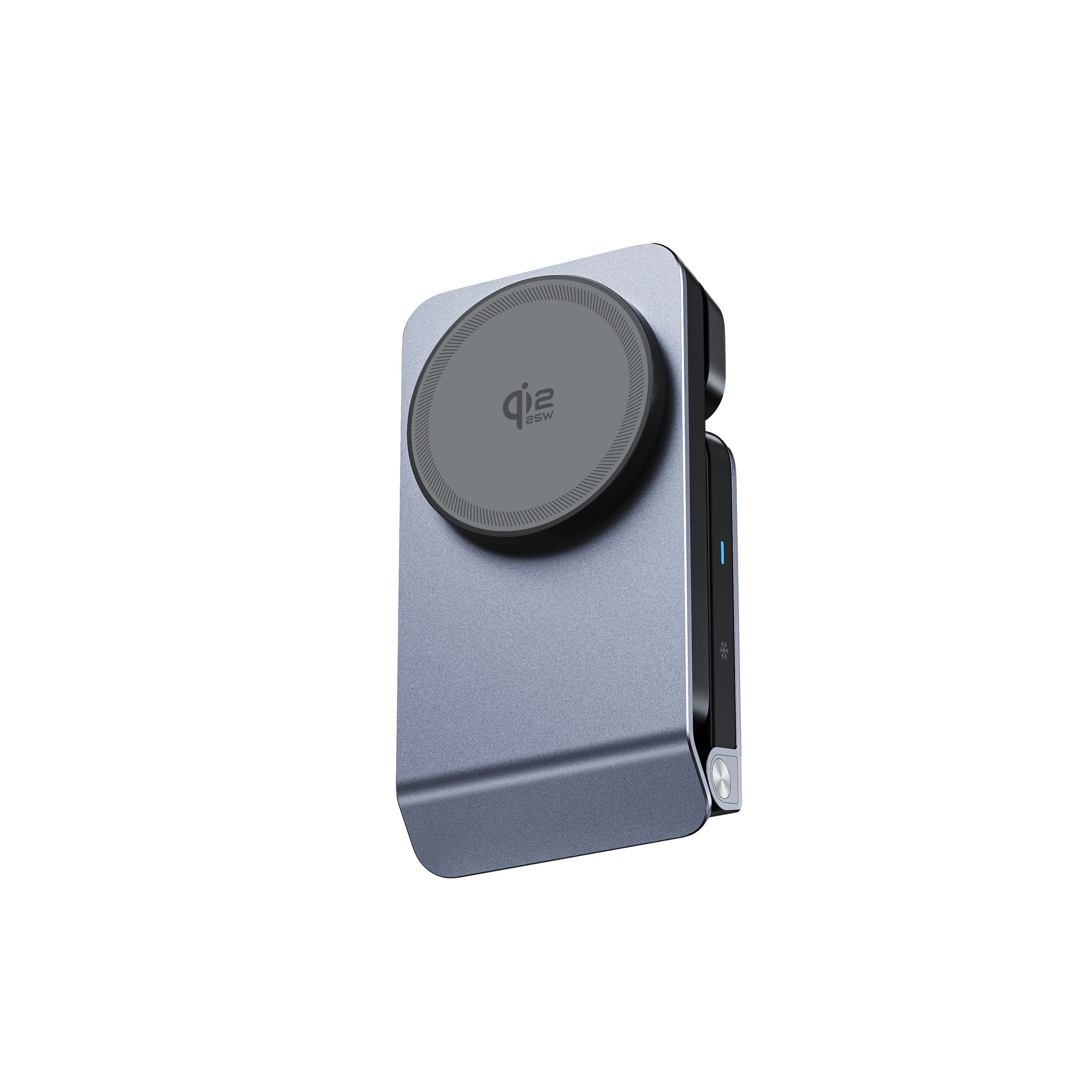
The development of Qi2 25W products is a good example.
Higher-power wireless charging requires more attention to:
- Coil design
- Magnetic alignment
- Power conversion efficiency
- Thermal conduction
- Heat dissipation
- Firmware and power management
- Foreign object detection
- Mechanical structure
Simply increasing charging power is not enough.
A high-performance wireless charger needs to maintain a balance between charging speed, efficiency, temperature, safety, and long-term reliability.
Active Cooling: The Next Step for High-Power Wireless Charging
As wireless charging moves toward higher power levels, passive heat dissipation may become increasingly challenging in compact products.
This is why active cooling technologies are attracting growing attention.
Depending on the product design, active cooling can include:
- Miniature cooling fans
- Semiconductor cooling
- Advanced thermal interfaces
- Vapor chambers
- Optimized heat sinks
- Improved internal airflow
- Thermally conductive structural materials
For example, a high-power magnetic wireless charger can combine precise magnetic alignment with active thermal management to help maintain a more stable operating temperature during extended charging.
This is particularly relevant for applications such as:
- Qi2 25W wireless chargers
- Magnetic power banks
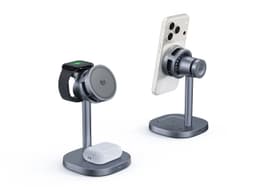
- Wireless charging stands
- Car wireless charging mounts
- High-power desktop charging stations
The objective is not simply to make a charger faster.
The objective is to make high-speed wireless charging more stable, efficient, and thermally controlled.
Is Wireless Charging Overnight Safe?
For modern smartphones and properly designed wireless chargers, overnight wireless charging is generally considered safe.
Your phone does not continuously receive maximum charging power throughout the entire charging process.
As the battery approaches a high state of charge, the charging system typically reduces power and uses battery-management functions to control the charging process.
Many smartphones also provide optimized or adaptive charging features designed to reduce the amount of time the battery remains at a very high state of charge.
However, the charging environment still matters.
For example, placing a phone under a pillow or blanket while charging can prevent heat from escaping.
For better thermal performance, it is recommended to:
- Charge on a hard, open surface
- Avoid direct sunlight
- Keep ventilation around the charger
- Avoid unnecessary heat sources
- Use a compatible and properly certified charger
Does a Wireless Charger Damage the Battery More Than a Cable?
There is no simple rule that wireless charging is inherently worse for a battery than wired charging.
Both technologies generate heat and rely on sophisticated power-management systems.
The actual battery impact depends on the complete charging system, including:
Power + Efficiency + Temperature + Charging Algorithm + Battery Management
A poorly designed wireless charger may run hotter than a high-quality one.
Likewise, a poorly designed wired charger can also create thermal and electrical problems.
Therefore, the more useful question is not:
"Is wireless charging bad for the battery?"
Instead, ask:
"Is the wireless charging system properly designed to manage power and heat?"
How to Choose a Better Wireless Charger
If battery health and charging performance are important, consider the following factors when selecting a wireless charger.
1. Look for Qi or Qi2 Certification
Certified products have gone through standardized testing for interoperability, performance, and safety.
For consumers and brands, certification provides an important layer of confidence when selecting a wireless charging product.
2. Check Thermal Management
Higher-power wireless chargers should have an appropriate thermal design.
For products supporting higher charging power, look for features such as optimized heat dissipation, temperature monitoring, or active cooling where appropriate.
3. Check Magnetic Alignment
For magnetic charging products, accurate alignment helps maintain efficient power transfer.
Qi2 magnetic alignment is designed to provide a more consistent connection between the transmitter and receiver.
4. Avoid Excessive Heat
Even the best charging technology cannot completely eliminate heat.
Avoid charging your phone in extremely hot environments or in locations where heat cannot escape.
5. Use a Compatible Charger and Power Adapter
The wireless charger, power adapter, smartphone, and charging protocol should work together as a complete system.
Using an appropriate power source helps ensure that the charger can operate within its intended performance range.
Wireless Charging Is Getting Faster—and Smarter
Wireless charging has evolved significantly from the early days of low-power charging pads.
Today, the focus is no longer simply on increasing charging speed.
The industry is moving toward a combination of:
Higher Power + Better Alignment + Higher Efficiency + Smarter Power Management + Better Thermal Control
Qi2 and the development of higher-power solutions such as Qi2 25W are part of this evolution.
For manufacturers, the challenge is to develop products that deliver fast charging without compromising thermal performance, reliability, safety, or user experience.
At RADERTECH, we focus on the development and manufacturing of wireless charging solutions for global brands, distributors, and technology companies.
Our capabilities cover OEM and ODM development, structural engineering, PCBA integration, magnetic charging solutions, thermal management, active cooling, and mass production.
From magnetic wireless chargers and charging stands to Qi2 magnetic power banks and high-power automotive charging solutions, we work with customers to develop products that balance performance, reliability, cost, and manufacturability.
The Bottom Line
Wireless charging is not inherently bad for your phone battery.
Battery aging is influenced primarily by factors such as heat, charging voltage, time spent at high charge levels, and charge cycles.
As wireless charging technology advances, improvements in magnetic alignment, power management, efficiency, and thermal management are helping make wireless charging faster and more reliable.
For high-power wireless charging, thermal management becomes particularly important.
The best wireless charging solutions are not simply those that deliver the highest wattage. They are the products that can deliver the required power efficiently, safely, consistently, and with controlled temperatures.
As Qi2 and higher-power wireless charging continue to develop, we believe the future of wireless charging will be defined not only by speed, but by efficiency, intelligent thermal management, reliability, and better overall user experience.
RADERTECH — One Stop OEM & ODM Manufacturer
RESEARCH • REFINEMENT • INNOVATION
Latest News