How to Choose a Qi2.2 Wireless Charger OEM Manufacturer in China | RADERTECH

Choosing the right Qi2.2 wireless charger OEM manufacturer in China is not simply about finding the lowest unit price. For brands, distributors, and consumer electronics companies, the right manufacturing partner should be able to provide reliable charging performance, appropriate thermal management, product customization, quality control, certification support, and stable mass production.
As wireless charging power continues to increase, particularly with 25W Qi2.2 solutions, the technical capability of the manufacturer becomes increasingly important.
This guide explains the key factors to consider when selecting a Qi2.2 wireless charger OEM/ODM manufacturer in China.
1. Check Qi2.2 Certification and Compliance
The first step is to understand the manufacturer's certification capability.
When evaluating a Qi2.2 wireless charger supplier, ask:
- Is the existing product Qi2.2 certified?
- What WPC certification applies to the product?
- Can the manufacturer support certification for customized versions?
- Will changes to the PCBA, coil, structure, or charging power affect certification?
- Which additional certifications are available for the target market, such as CE, FCC, RoHS, or UKCA?
A reliable OEM manufacturer should clearly explain the certification status of its existing products and identify which product changes may require additional testing or certification.
For a new product development project, certification should be considered during the engineering stage rather than after mass production has already been planned.
2. Look Beyond the Rated Charging Power
A product labeled as “25W” does not necessarily mean that a smartphone will continuously receive 25W wireless charging throughout the entire charging cycle.
Actual wireless charging performance can be affected by:
- Smartphone compatibility
- Charging protocol
- Coil alignment
- Input power
- Ambient temperature
- Device temperature
- Charging efficiency
- Thermal management
- Protection and power management algorithms
For this reason, brands should ask manufacturers to explain how the product performs under realistic conditions rather than evaluating a wireless charger only by its maximum rated output.
For high-power Qi2.2 products, engineering validation and thermal testing are particularly important.
3. Evaluate Thermal Management Capability
Thermal management is one of the most important factors when developing a higher-power wireless charger.
Wireless power transmission naturally generates heat, and the challenge becomes more significant when charging power increases or when the product has a compact design.
A manufacturer should be able to explain which thermal management solution is appropriate for the intended application.
Common approaches include:

4. Confirm the Manufacturer's OEM and ODM Development Capability
Not every supplier that offers “OEM” services can actually develop a product from the engineering level.
Before starting a project, confirm whether the manufacturer has experience with:
- Industrial design
- Mechanical and structural engineering
- Electronic engineering
- PCBA development
- Prototype development
- Tooling and mold development
- Thermal management
- Reliability testing
- Certification support
- Mass production
For example, changing the external housing of an existing wireless charger may require relatively limited engineering work. Developing a completely new internal structure, PCBA, cooling system, or charging platform is a much more complex ODM project.
The more customized the product, the more important the manufacturer's engineering capability becomes.
5. Understand What Can Actually Be Customized
Ask the manufacturer to clearly define its customization scope.
Typical product-level customization may include:
- Product dimensions
- Housing design
- Materials
- Colors
- Logo
- Surface finishing
- Magnets
- Cables
- Connectors
- Charging power
- Coil configuration
- Cooling solution
- Display or indicators
- Packaging
For deeper OEM/ODM projects, customization may also involve:
- PCBA
- Internal structure
- Charging components
- Thermal management system
- Firmware or software functions where applicable
- Protection features
A supplier offering logo printing and packaging customization should not automatically be considered a full ODM manufacturer.
For brands developing a differentiated product, it is important to understand whether the manufacturer can support engineering changes at both the external and internal levels.
6. Compare MOQ, Tooling and Development Costs
Unit price is only one part of the total project cost.
Before placing an order, ask about:
- MOQ for standard products
- MOQ for customized products
- Prototype cost
- Engineering or development fees
- Mold and tooling costs
- Certification costs
- Packaging development costs
- Sample lead time
- Mass production lead time
A useful way to evaluate a project is to consider the total development investment:
Total project cost = Product development + Tooling + Certification + Packaging development + Unit cost
For a customized product, a slightly higher unit price may still be more economical if the manufacturer provides stronger engineering support, fewer development iterations, and better production stability.
7. Evaluate Quality Control and Reliability Testing
Wireless charging products combine electronic components, wireless power transmission, magnets, mechanical structures, and thermal management.
Quality control should therefore go beyond visual inspection.
Ask whether the manufacturer has processes covering:
- Incoming material inspection
- In-process quality control
- Finished product inspection
- Charging performance testing
- Aging testing
- Temperature testing
- Drop testing
- Connector testing
- Material inspection
- Reliability testing
For high-power wireless chargers, thermal performance should also be validated under realistic operating conditions.
A manufacturer with a structured quality system and documented testing process can reduce the risk of unexpected issues during mass production.
8. Check Factory and Production Experience
Before selecting an OEM manufacturer, evaluate the manufacturer's actual production and engineering background.
Important factors include:
- Factory location
- Production capability
- Engineering team
- Quality control team
- Existing product portfolio
- OEM/ODM experience
- Export experience
- Production capacity
- Certification experience
- Supply chain capability
It is also useful to ask for examples of similar products the manufacturer has already developed.
A supplier that has previously produced Qi2.2 wireless chargers, magnetic charging products, wireless car chargers, or other high-power wireless charging solutions may be able to identify engineering risks earlier in the development process.
9. Ask About the Development Process
A professional OEM/ODM manufacturer should be able to explain the development process clearly.
A typical customized wireless charger project may include:
Concept → Product Design → Engineering Development → Prototype → Testing → Tooling → Certification → Pilot Production → Mass Production
Before starting, clarify:
- Who is responsible for product design?
- Who owns the customized design?
- Who pays for tooling?
- How many prototype revisions are included?
- When does certification start?
- What happens if the prototype fails testing?
- What is the expected mass production lead time?
Clear responsibilities at the beginning of the project can prevent misunderstandings later.
10. Choose a Manufacturer That Understands the Application
The best OEM manufacturer is not necessarily the one with the largest product catalog.
The more important question is whether the manufacturer understands the application and target market.
For example, a wireless car charger designed for high-temperature driving conditions may require a different thermal strategy from a desktop charging station.
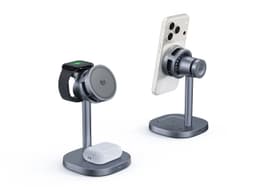
Similarly, a compact 3-in-1 travel charger may prioritize:
- Foldability
- Size
- Weight
- Magnetic alignment
- Heat dissipation
- Mechanical durability
A 25W desktop charger may have completely different engineering priorities.
The manufacturer should therefore recommend a suitable technical solution based on the intended application rather than simply offering an existing product.
11. Questions to Ask Before Choosing a Qi2.2 OEM Manufacturer
Before placing an order, consider asking the following questions:
- Is the product Qi2.2 certified?
- What wireless charging power can the product support?
- What factors may affect actual charging performance?
- How is heat managed during high-power charging?
- Does the manufacturer have experience with TEC or other active cooling solutions?
- Can the PCBA and internal structure be customized?
- What is the MOQ for a customized product?
- What tooling is required?
- What is the prototype development timeline?
- What certifications are available?
- What reliability tests are performed?
- What is the expected mass production lead time?
- Who owns the customized tooling and product design?
- Can the manufacturer provide customized packaging and branding?
- Can the manufacturer support the project from concept to mass production?
If a supplier cannot provide clear answers to these questions, it may be worth evaluating alternative manufacturers before committing to the project.
Why Work with RADERTECH?
RADERTECH is a Shenzhen-based OEM and ODM manufacturer specializing in wireless charging and consumer electronics products.
Our capabilities cover product design, electronic and mechanical engineering, prototype development, testing, certification support, and mass production.
Our wireless charging product portfolio includes:
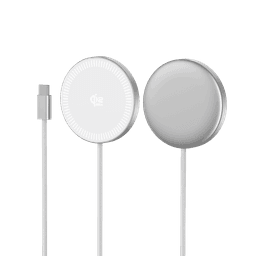
- Qi2.2 wireless chargers
- 25W wireless charging solutions
- TEC-cooled wireless chargers
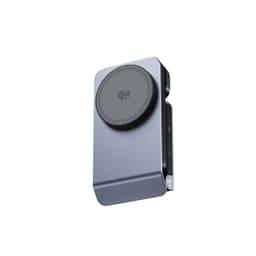
- Magnetic wireless car chargers
- 3-in-1 wireless charging stations
- Semi-solid-state magnetic power banks
- Custom OEM/ODM wireless charging products
For brands developing a new wireless charging product, RADERTECH can support different levels of customization, from product and cosmetic customization to deeper structural and electronic development.
The appropriate solution depends on the target application, charging performance, industrial design, thermal requirements, certification requirements, MOQ, and target cost.
Conclusion
Choosing a Qi2.2 wireless charger OEM manufacturer should be based on more than product price or catalog size.
A reliable manufacturing partner should combine:
Qi2.2 certification capability + charging performance + thermal management + engineering capability + customization + quality control + certification support + stable mass production.
For higher-power products such as 25W Qi2.2 wireless chargers, thermal management and engineering validation become particularly important.
If you are developing a Qi2.2 wireless charger, magnetic wireless charger, wireless car charger, or other customized wireless charging product, selecting the right OEM/ODM partner at the beginning of the project can significantly reduce development risks and improve the path from prototype to mass production.
FAQ
What is Qi2.2?
Qi2.2 is an updated generation of the Qi wireless charging standard developed by the Wireless Power Consortium (WPC), supporting higher-performance wireless charging solutions and improved interoperability for compatible devices and accessories.
https://www.radertech.com/article/qi2-2-wireless-charging-standard-2026
How do I choose a reliable Qi2.2 wireless charger manufacturer in China?
Look beyond price and evaluate Qi2.2 certification capability, charging performance, thermal management, engineering resources, customization capability, quality control, certification support, MOQ, and mass production experience.
Can a Qi2.2 wireless charger be customized?
Yes. Depending on the manufacturer's capabilities, customization can include the product housing, dimensions, materials, colors, logo, packaging, PCBA, internal structure, coil configuration, charging power, and thermal management solution.
Does a 25W wireless charger always charge a phone at 25W?
No. Actual charging power depends on the phone, charging protocol, alignment, temperature, input power, thermal conditions, and other system limitations. The rated output of a charger should not be interpreted as guaranteed continuous power delivered to every device.
How does TEC cooling help wireless charging?
TEC, or thermoelectric cooling, provides active thermal management by transferring heat within the cooling system. It can be considered for higher-power wireless charging applications where temperature control is important.
What MOQ is typical for a customized Qi2.2 wireless charger?
MOQ varies depending on whether the project uses an existing platform or requires new tooling and engineering development. Brands should confirm MOQ, tooling costs, development fees, and certification requirements with the manufacturer during the quotation stage.
How long does it take to develop a customized wireless charger?
The timeline depends on the level of customization, product structure, electronics, tooling, testing, and certification requirements. A supplier should provide a project-specific development schedule after reviewing the product requirements.
Can RADERTECH develop a completely new Qi2.2 wireless charger?
RADERTECH supports both product customization and OEM/ODM development. The available development scope depends on the required product design, internal structure, electronics, charging performance, thermal solution, certification requirements, and production target.
https://www.radertech.com/product/mq33-best-tec-semiconductor-active-cooling-3-in-1-wireless-charger
Latest News