Qi2.3.1 vs Qi2.2: What Wireless Charging Brands Need to Know About 25W Product Development
The wireless charging industry is moving beyond the basic question of how much power a charger can deliver. With Qi2 introducing magnetic alignment and Qi2.2 supporting up to 25W magnetic wireless charging, product developers now have more to consider than output power alone.
The latest Qi v2.3.1 update puts more attention on certification and testing requirements. It does not introduce a new wireless charging power level above 25W. Instead, it focuses on how product capabilities are declared, how different power modes are tested, and how communication between devices is verified.
From our experience working on wireless chargers and magnetic power banks, this is a practical change for product development. A charger may reach its target power during initial testing, but that does not automatically mean it is ready for certification or stable mass production. Coil positioning, heat management, magnetic strength, component layout, and compatibility all need to be considered together.
What Has Changed from Qi2 to Qi2.2 and Qi v2.3.1?
Qi2 brought magnetic positioning into the wireless charging standard through the Magnetic Power Profile (MPP). Magnets help align the phone with the charging coil, making positioning more consistent and reducing the problems caused by coil misalignment.
Qi2.2 then raised the supported magnetic wireless charging power to 25W for compatible products. This gives brands more room to develop higher-power car chargers, desktop charging stations,s and magnetic power banks.
The increase in power also brings practical engineering requirements. The charging coil, power management components, ts and receiving device generate heat during operation. As power increases, the internal layout and thermal design become more important. Simply changing the charging module is rarely enough to turn an existing 15W product into a reliable 25W product.
Qi v2.3.1 should be understood in a different way. Its focus is on certification and testing rather than another increase in charging power. Product capability declarations, power-mode testing, and communication protocol verification are among the areas receiving attention. For brands, the important point is to make sure that the product design, claimed specifications, and certification configuration match.
What Do the First Certified Products Tell Us?
Publicly reported Qi v2.3.1 certified products already cover several product types. They include desktop charging stations, car wireless chargers,s and magnetic power banks. These examples are useful because each category has different development requirements.
The Acer Gadget M1 Pro is a 7-in-1 desktop charging station. Its published certification information lists MPP25, MPP15, and BPP configurations. The product combines several charging areas in one base, together with display and lighting features. For this type of product, the challenge is not limited to wireless charging. The layout of each charging area, power distribution when several devices are connected, screen integration, and overall thermal management all need to be considered.
ELECOM's Cool Fan Wireless Car Holder is another example. Its published certification information lists MPP25 support, and the product uses an active cooling design. This is a relevant direction for car chargers. A phone may be running navigation or playing music while charging, and the temperature inside a parked car can rise significantly in summer. A 25W car charger therefore needs to consider airflow, fan noise, installation space and temperature protection, not just magnetic attraction and charging output.
Peak Design's Wireless Kickstand Travel Battery shows how 25W magnetic wireless charging can be applied to a portable power bank. The product combines a 5,000mAh battery, magnetic wireless charging, a USB-C port,t and a foldable stand. In this category, internal space is limited. Battery capacity, product thickness, magnetic strength, heat dissipation, and wired output all compete for space and need to be balanced during development.
These products are different in appearance and application, but they point to the same issue: a charging solution must be developed around the complete product, not selected by looking at the power rating alone.
What We Consider When Developing a 25W Wireless Charging Product
At RADERTECH, we work with different product structures, including car chargers, desktop wireless chargers, and magnetic power banks. The development priorities are not the same for each type.
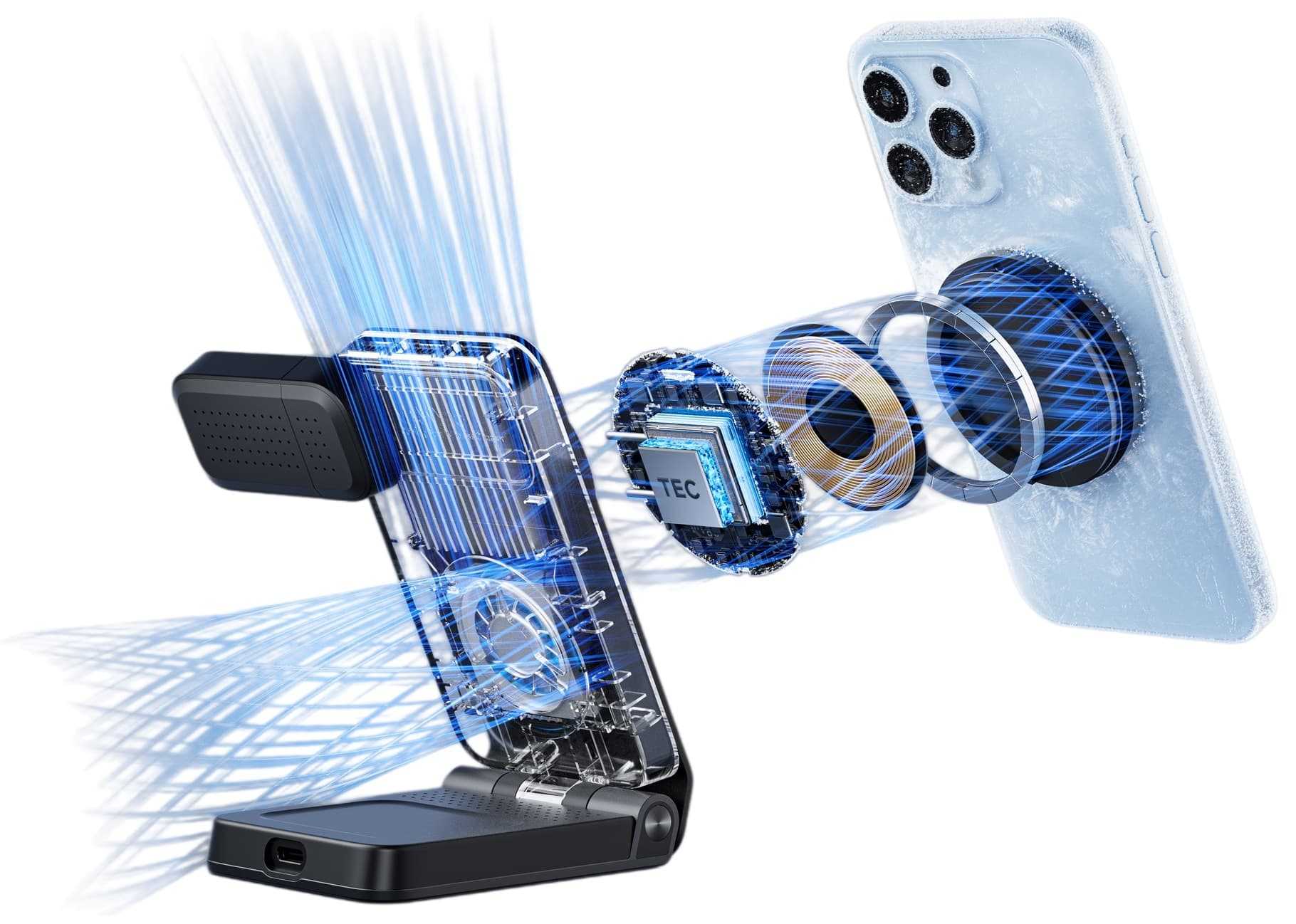
For a car charger, heat management and mechanical stability are two major considerations. The product has to fit the available installation space while holding the phone securely during driving. If active cooling is used, the fan position, airflow path, and operating noise also need to be considered. A cooling component should not be added at the last stage simply because a prototype becomes too hot. It needs to be considered together with the housing and internal structure.
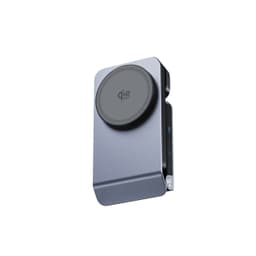
Our MC07C 25W Qi2.2 TEC Cooling Magnetic Wireless Car Charger is one example of this product direction. It combines magnetic wireless charging with TEC semiconductor cooling. For this type of project, the development work involves more than fitting the charging module into a housing. The cooling structure, component arrangement, power supply,y and overall dimensions need to work together.
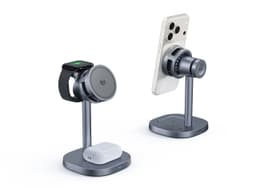
Desktop chargers have a different set of requirements. They are often designed to charge more than one device and may include a stand, display, ay or additional charging areas. The internal layout needs to account for the position of each charging module and the way power is distributed during use. Our MG08 Qi2.2 25W desktop charger uses semiconductor cooling in a vertical 3-in-1 design. This type of product requires attention to both the charging structure and the overall user-facing design.
Magnetic power banks are more restricted by size and weight. The battery cell, wireless charging coil, magnets, circuit board, and housing all occupy the same limited space. Increasing wireless output while keeping the product compact requires early decisions about the battery, internal layout, and thermal management.
Our P13 10000mAh semi-solid-state magnetic power bank supports up to 25W Qi2.2 wireless charging and up to 45W wired output through USB-C and its built-in cable. For products in this category, battery selection is an important part of the project. Semi-solid-state cells are worth evaluating for certain product designs, but the cell itself does not replace the need for proper battery protection, power management,t and safety verification.
These examples reflect the type of work we believe should happen during product development: identifying the main engineering constraints before the appearance and specifications are finalized. It is usually more efficient to address these issues during the design stage than to make major structural changes after samples have been built.
How RADERTECH Supports OEM and ODM Projects
RADERTECH is a manufacturer of wireless charging products, magnetic power banks, ks and consumer electronics accessories. Our work covers product development and manufacturing, including product definition, structural design, material selection, sample development, tooling coordination, product verification, and mass production.
For a brand planning a new Qi2 or Qi2.2 product, we can discuss the intended application, target specifications, housing design, charging solution, and cost requirements at the beginning of the project. If the customer already has a design, we can review the product requirements and work on the manufacturing solution. If the project starts from an idea or reference product, we can help evaluate the structure and functions before moving into sample development.
Our current focus includes 25W magnetic wireless chargers, TEC-cooled wireless chargers, active-cooling car chargers, desktop charging stations,s and semi-solid-state magnetic power banks.
We do not treat every project as a standard product with a different logo. A car charger, a desktop charging station, and a magnetic power bank have different limitations. The right solution depends on the target market, product size, required functions, expected cost, and certification plan.
Certification also needs to be considered early. The applicable Qi configuration and testing requirements should be confirmed for the specific product. We can support product preparation and coordinate the development process, but certification approval depends on the final product and the requirements of the relevant certification body.
Frequently Asked Questions
- Does Qi v2.3.1 increase wireless charging power beyond 25W?
No. Qi v2.3.1 focuses on certification and testing requirements. The 25W magnetic wireless charging capability is part of Qi2.2.
- What is the main difference between Qi2 and Qi2.2?
Qi2 introduced standardized magnetic alignment through MPP. Qi2.2 supports up to 25W magnetic wireless charging for compatible products. Actual charging performance also depends on the phone and charger.
- Why does a 25W wireless charger need thermal management?
The charging coil and electronic components generate heat during operation. Higher power makes thermal design more important, particularly for products used for long periods, such as car chargers and desktop charging stations.
- Can RADERTECH develop customized Qi2.2 wireless chargers?
Yes. We can support OEM and ODM projects involving product structure, appearance, materials, cooling design, charging functions, and sample development. The final solution depends on the product requirements and certification plan.
- What should brands consider when developing a 25W magnetic power bank?
Important factors include battery cell selection, wireless charging performance, magnetic strength, internal heat management, USB-C output, product thickness,s and weight. These requirements should be evaluated together before the product structure is finalized.
Discuss Your Next Wireless Charging Project with RADERTECH
If you're planning a Qi2.2 25W wireless charger, an active-cooling car charger, a desktop charging station, or a magnetic power bank, RADERTECH can work with your team on product development and OEM/ODM manufacturing.
Share your target specifications, reference design, or product idea with us. We can review the requirements and discuss a suitable development approach.
Email: neil@radertech.com
WhatsApp: +86 137 1709 3665
Latest News